
SLSO’s Performance of G.F. Handel’s “Messiah” Was Animated and Vibrant
–by Tom Schmidt
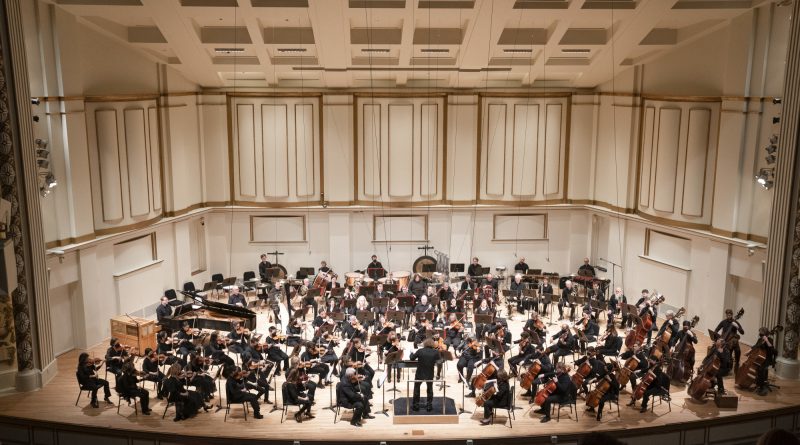
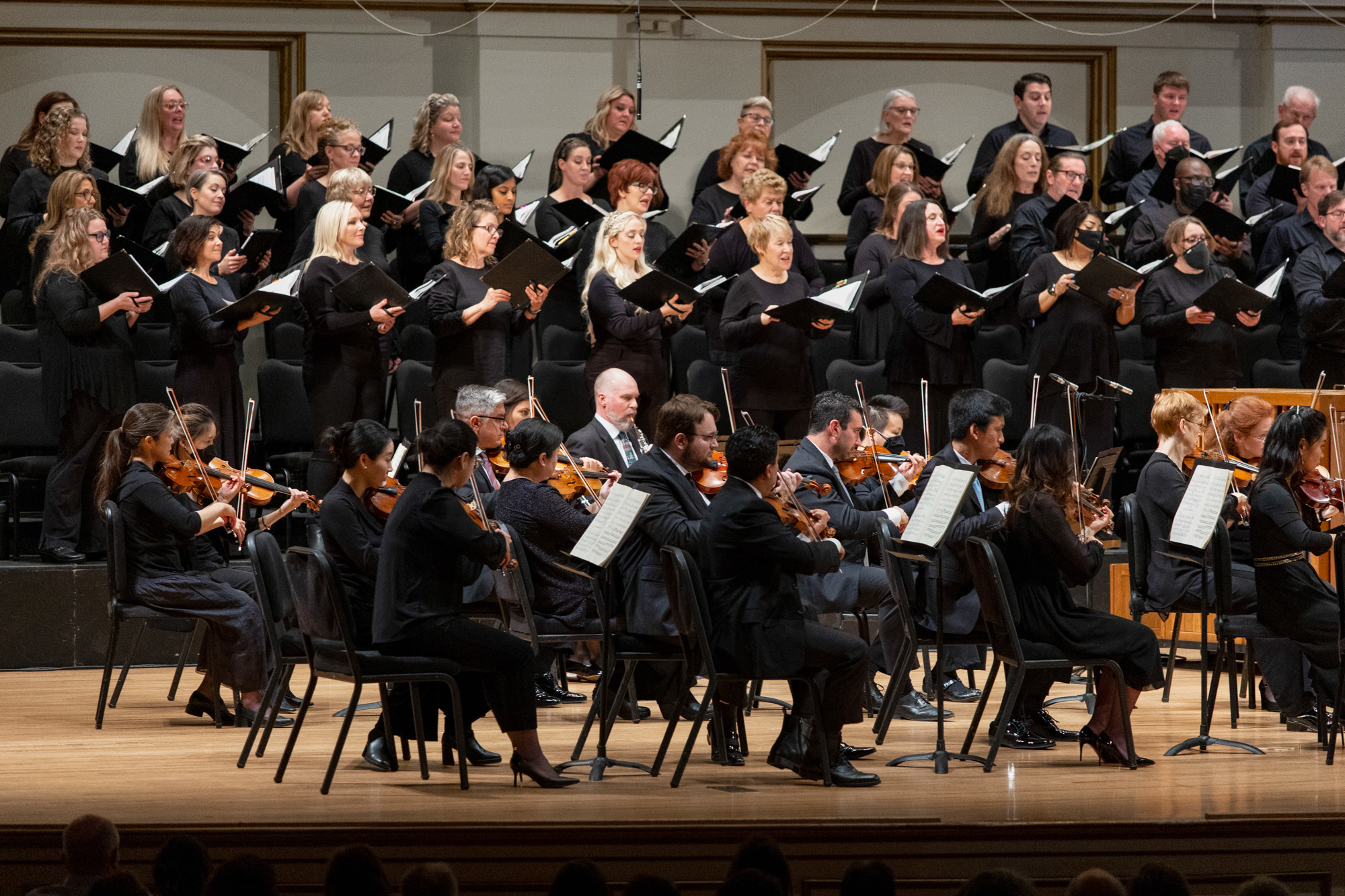
Saturday night’s Saint Louis Symphony Orchestra’s performance of Handel’s “Messiah” at Powel Hall in midtown Saint Louis came with much enthusiasm and anticipation. After all, it was conducted by Nicholas McGegan, who has been a perennial favorite of the orchestra for the past forty years.
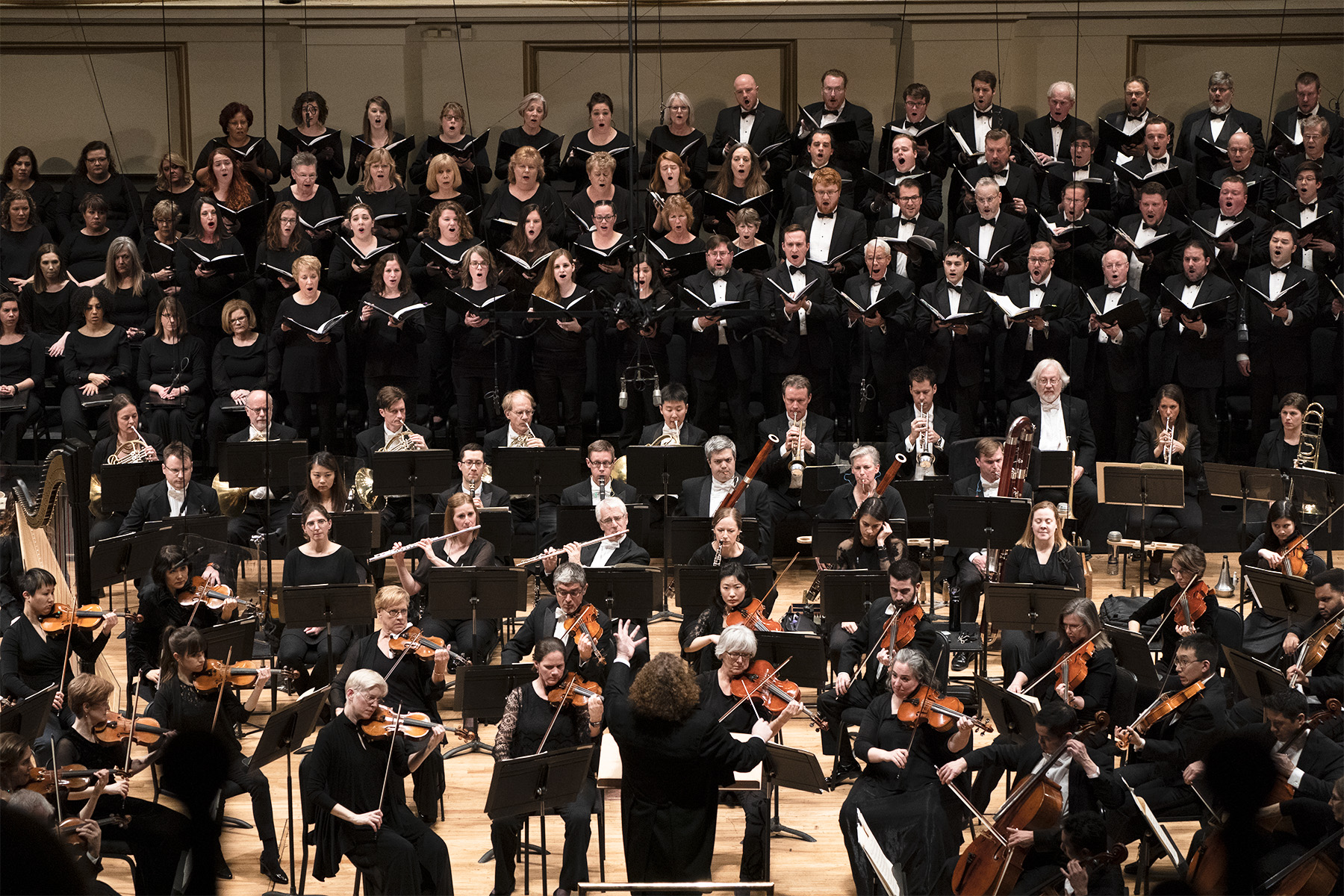
McGegan brings his vast expertise of the Baroque period with him, as it was years ago that he led his Philharmonia Baroque Orchestra using correct performance practice on period instruments. He is typically animated on the podium and seems to enjoy being engaged with the orchestra, who also seem to enjoy it, as well.
One of the first things I noticed was in the placement of the soloists. Very often all four soloists are placed in front of the orchestra the entire time. They then stand when it is their turn to perform. This was not the case Saturday night. The soprano and contralto soloists were on the left side of the stage, about a third of the way back. The tenor and bass soloists were on the right side of the stage. They would walk up near the end of the preceding movement. They would also leave while the orchestra either finished the instrumental of their solo or when the next movement was beginning. It seemed effective but caught me off guard since I was not accustomed to this.
The soloists did not go overboard in adding flourishes and excessive ornamentation to their parts. In the Baroque period, it was expected that they would add their own ornamentation. Saturday night’s performance was done in good taste. The scheduled bass soloist (Philippe Sly) was ill and could not perform this weekend. Instead, Brandon Cedel did a fine job filling in.
The tempo was rather ideal throughout. The slow sections didn’t drag nor did the faster sections seem ridiculously fast. Throughout all of this, McGegan worked well with the soloists and the orchestra as well as keeping the chorus together. He had good timing in letting the chorus know when to stand to be ready for when they were to sing and sit when it was appropriate to do so.
I was a little disappointed that the Pastorale Symphony in Part 1 was cut short. Also, a recitative, an air, and two choruses were omitted from Part 3. Though these are generally omitted from some performances, for whatever reason. Handel did revise “Messiah” several times throughout his lifetime, so maybe McGegan chose to do one of those revisions in which these movements were omitted.
The continuo used either a harpsichord or a portative organ. While I could hear the harpsichord whenever it played, I could not hear the organ for most of the performance. I could hear some in Part 3. At first, I thought it was because I was sitting in the lower balcony, but I could consistently hear the harpsichord even when the orchestra was full and playing loudly and the chorus was singing. I could not hear the organ even when it was accompanying just a soloist. I’m not sure if adding another stop would have made it too loud. Generally, the portative organs have a choice of a few ranks of pipes to play at any volume.
The intonation of the soloists and the chorus were excellent. The execution of the Baroque trumpets was a delight. And the audience appreciated the entire performance with applause calling out the soloists and McGegan for extra bows. I enjoyed the performance and watching McGegan’s whimsical conducting gestures. His first time conducting “Messiah” was actually in St. Louis in 1986. I have no doubt that he had that same enthusiasm all those years ago that he had Saturday night.
Editor’s note: due to a technical malfunction no photos were taken from that evening’s performance.